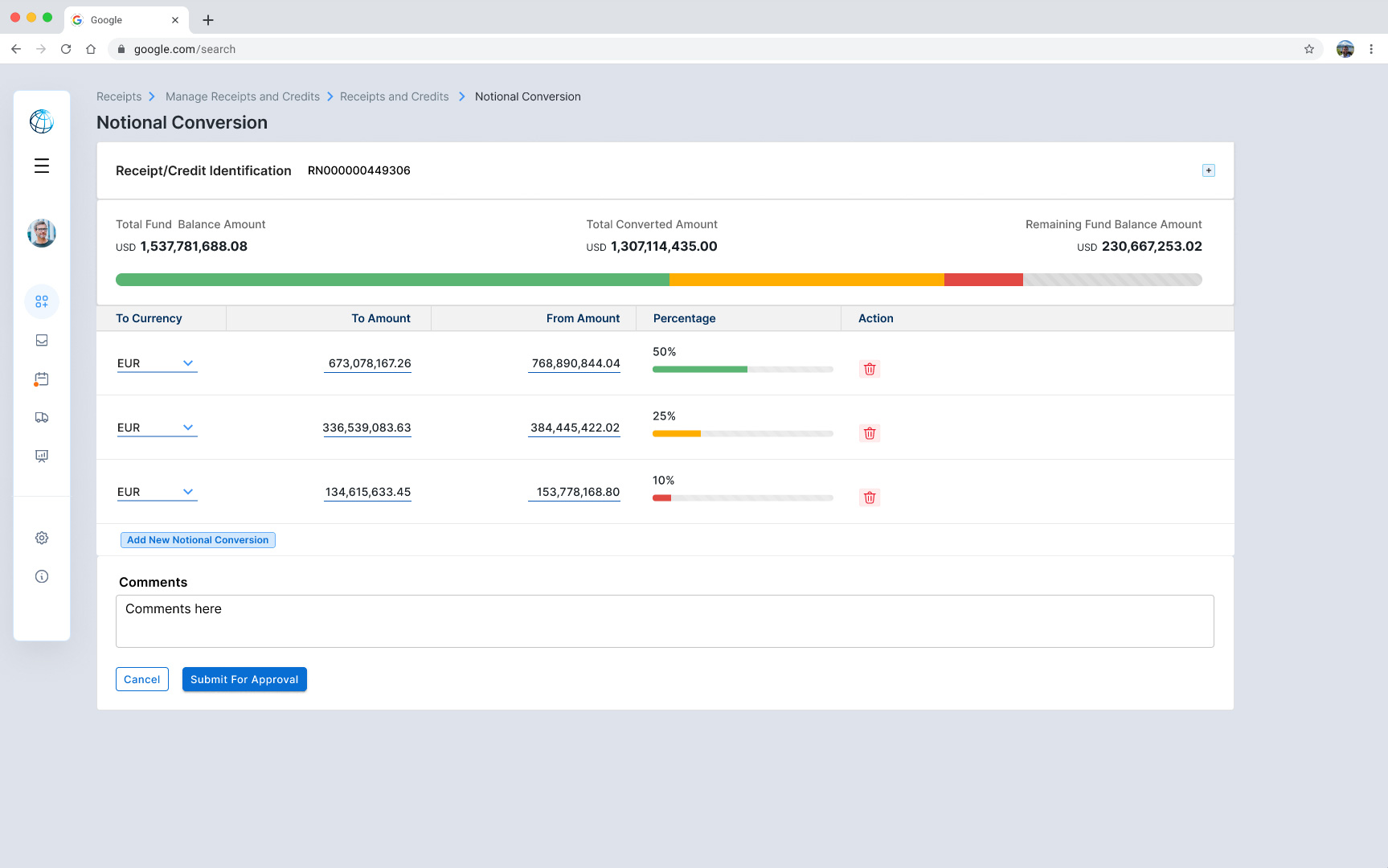
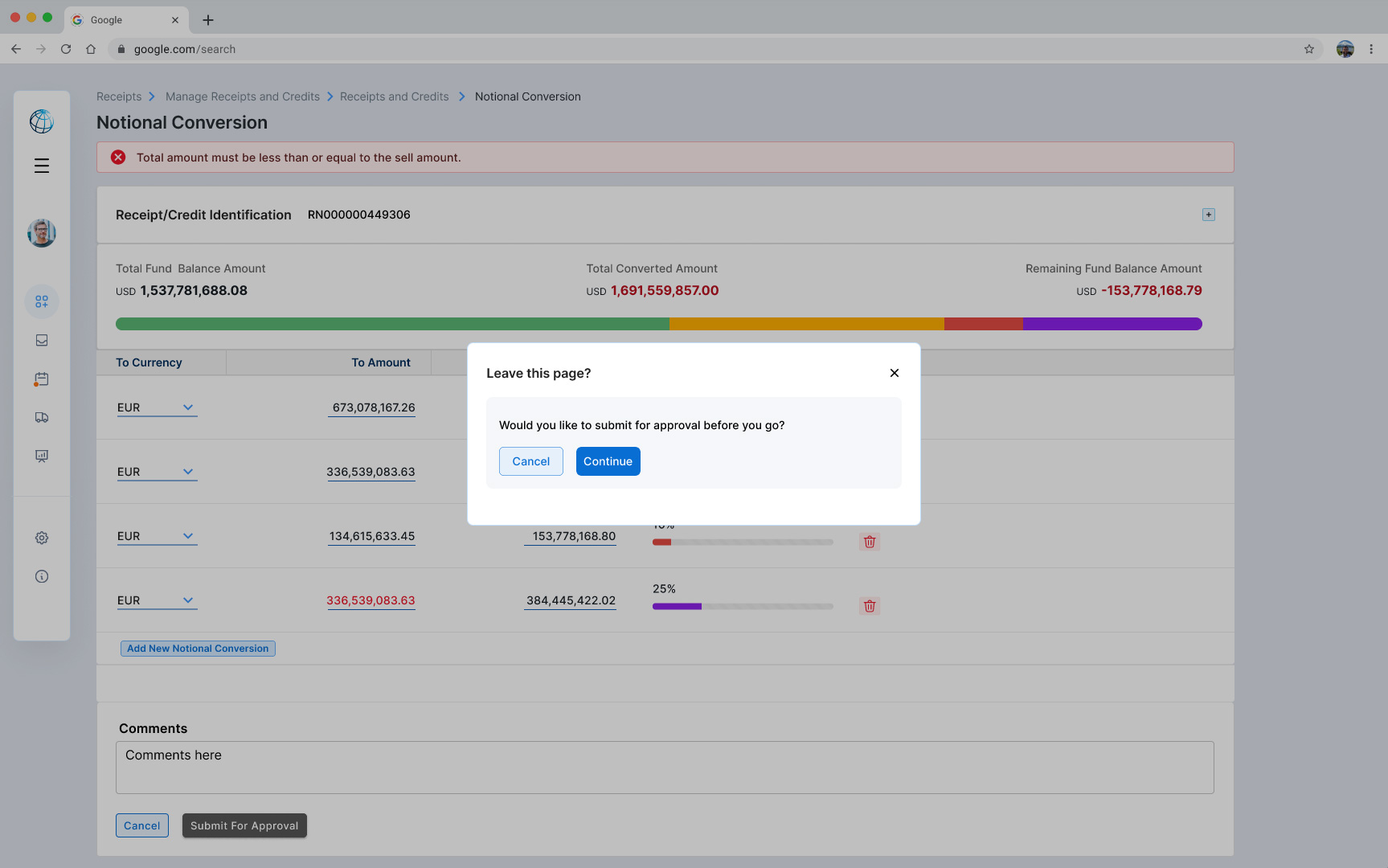
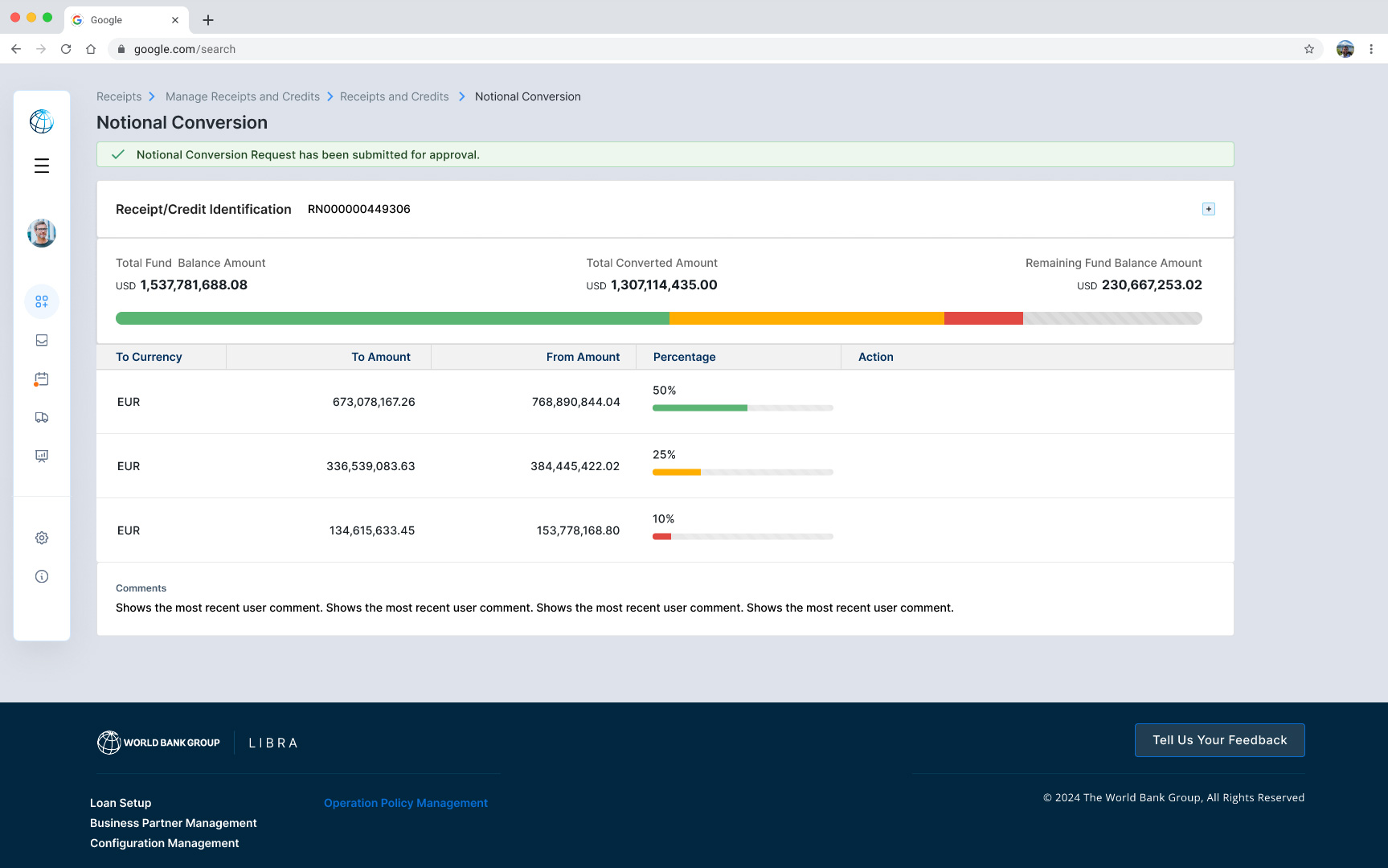
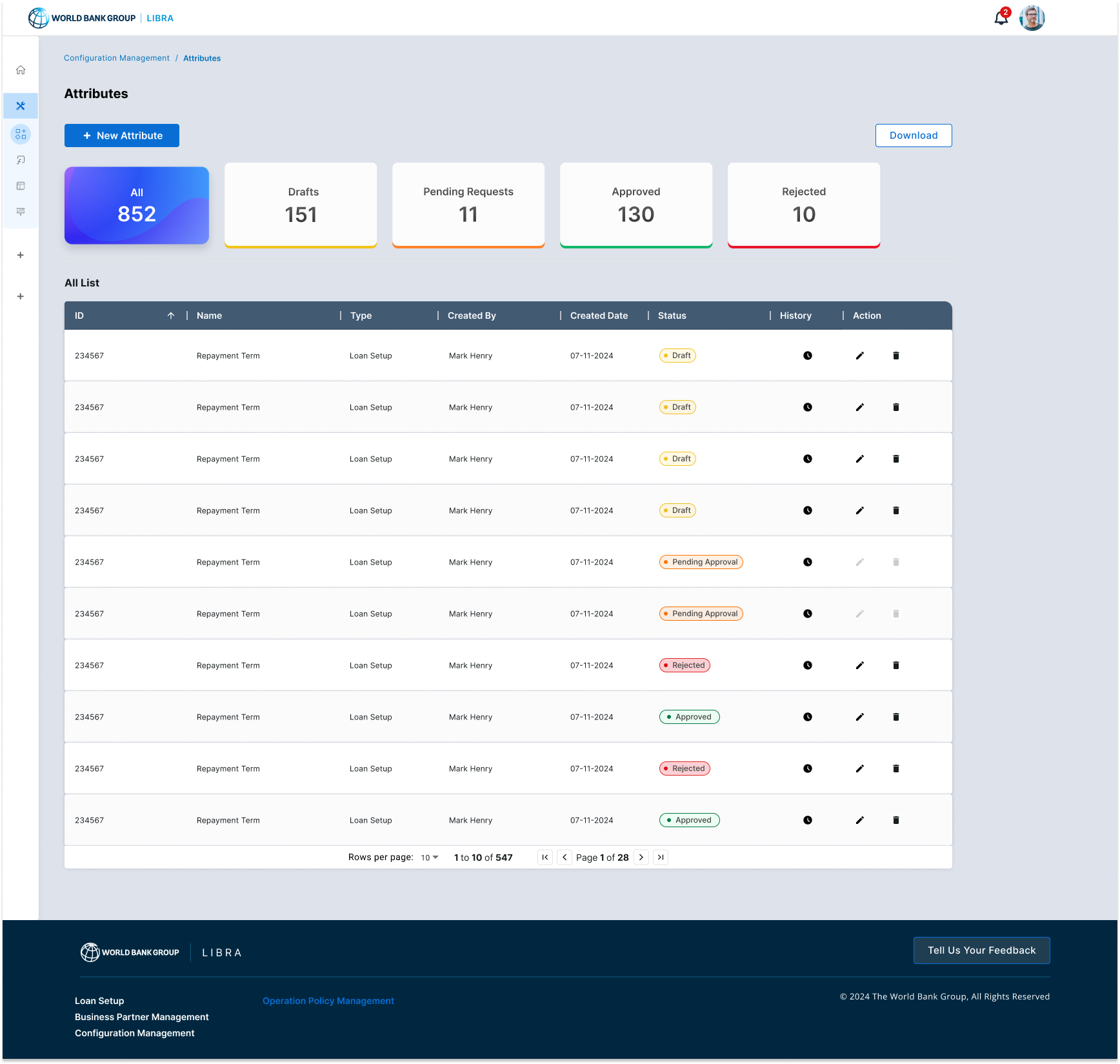
UX team conducted comprehensive user research, including contextual inquiries, stakeholder interviews, and collaborative workshops with business owners, SMEs, and business analysts. These efforts helped us clearly define user needs and align product goals with strategic delivery milestones set by the World Bank.
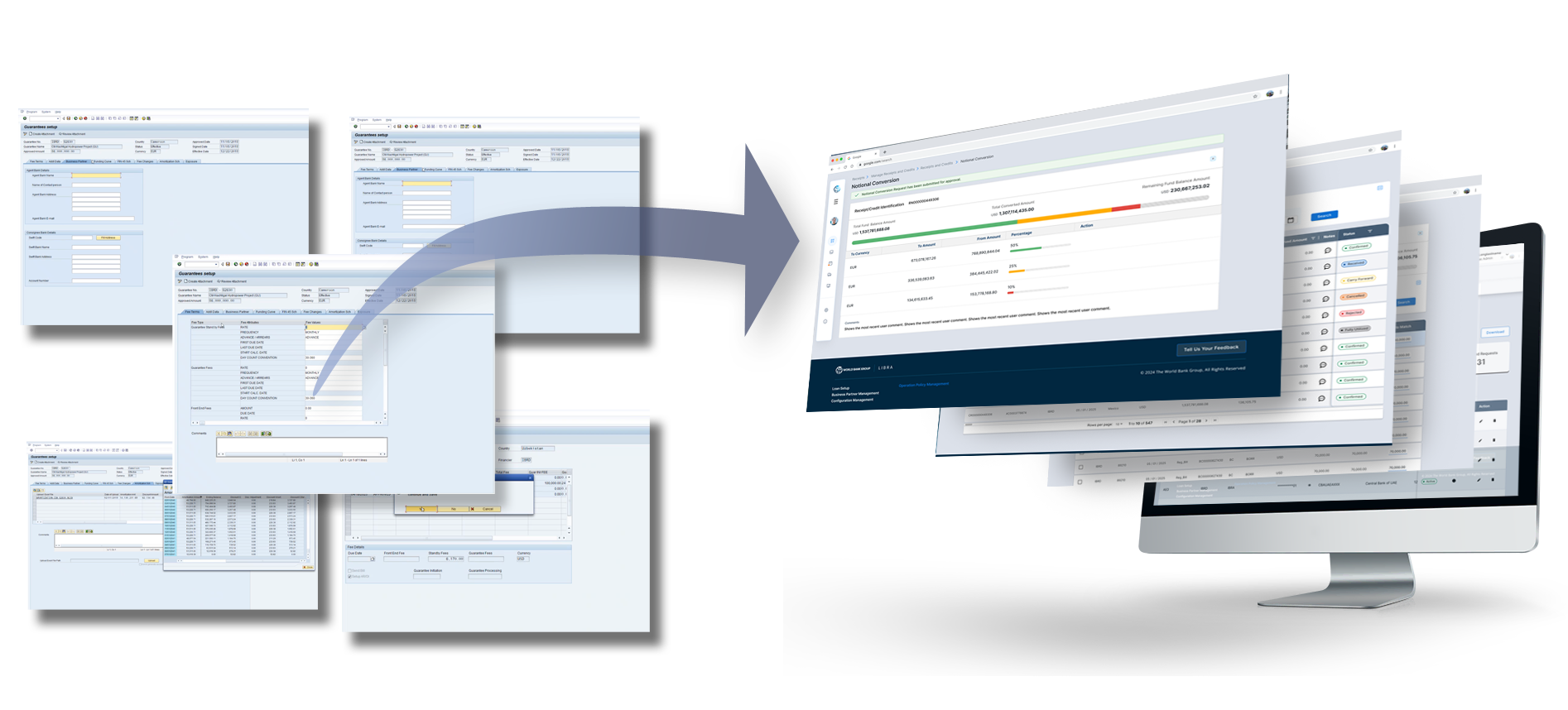
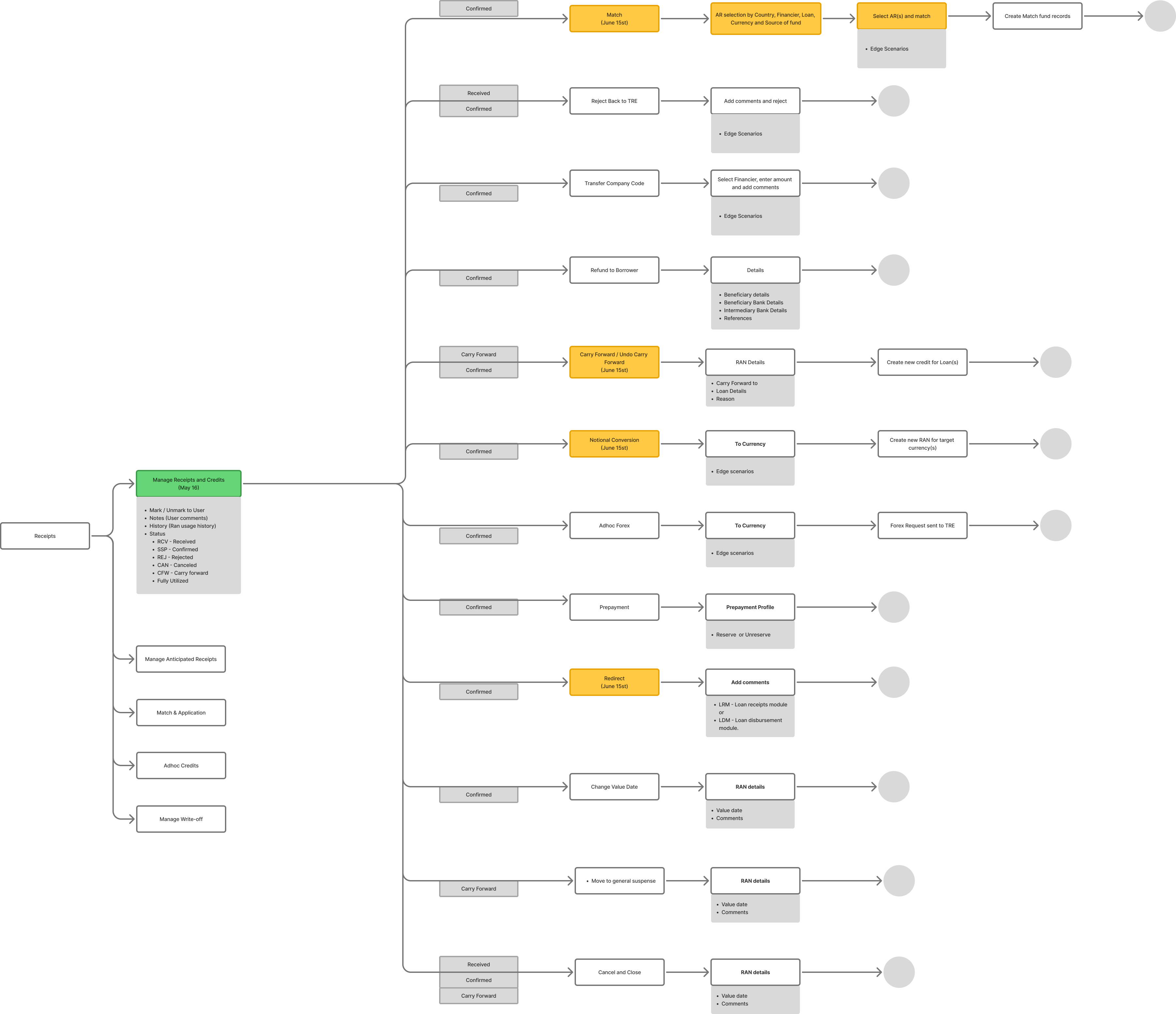
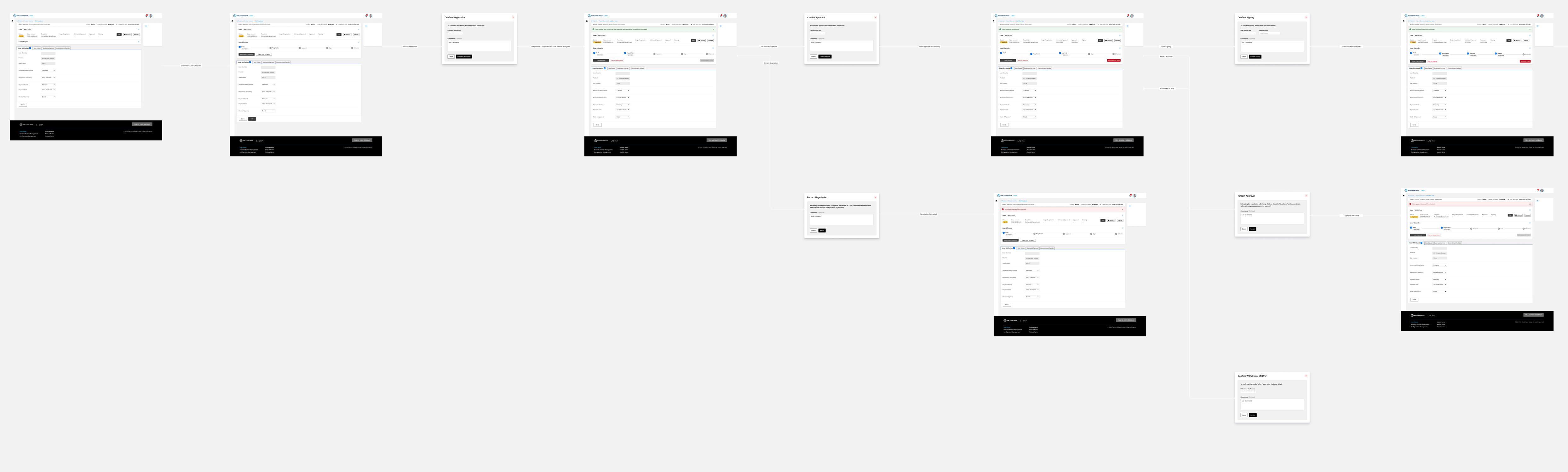
We thoroughly reviewed all user stories and functional requirements, and participated in detailed system walkthroughs with business analysts to understand the current system’s pain points and identify key areas for improvement. This deep immersion enabled us to map out enhanced workflows and reimagine the end-to-end user journey.
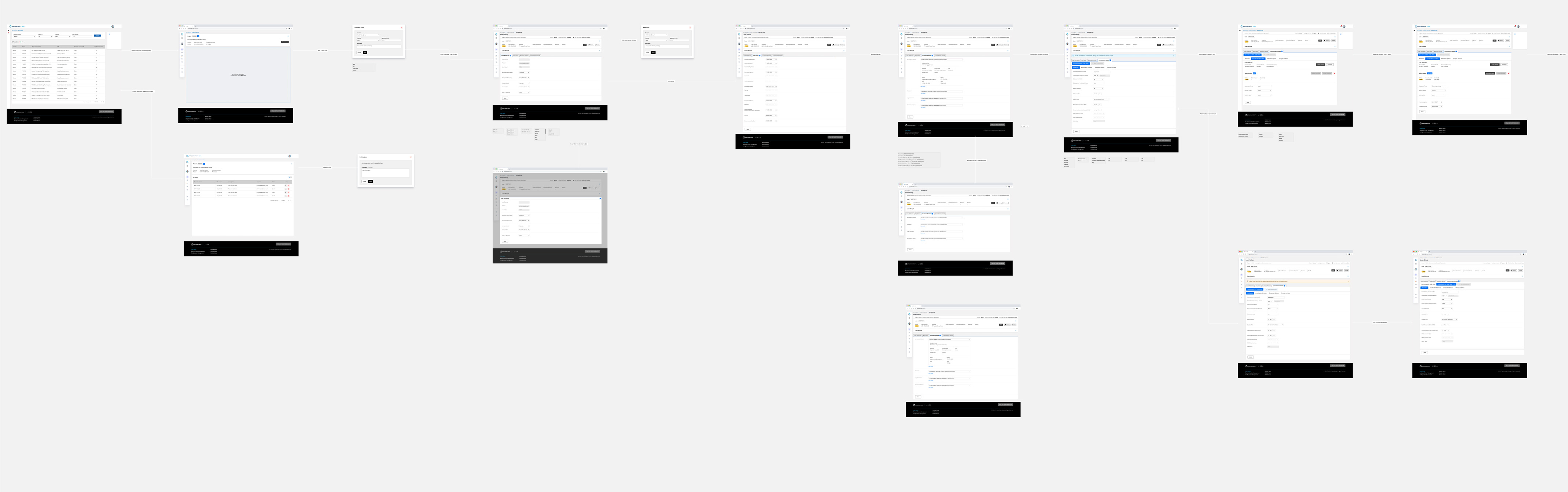
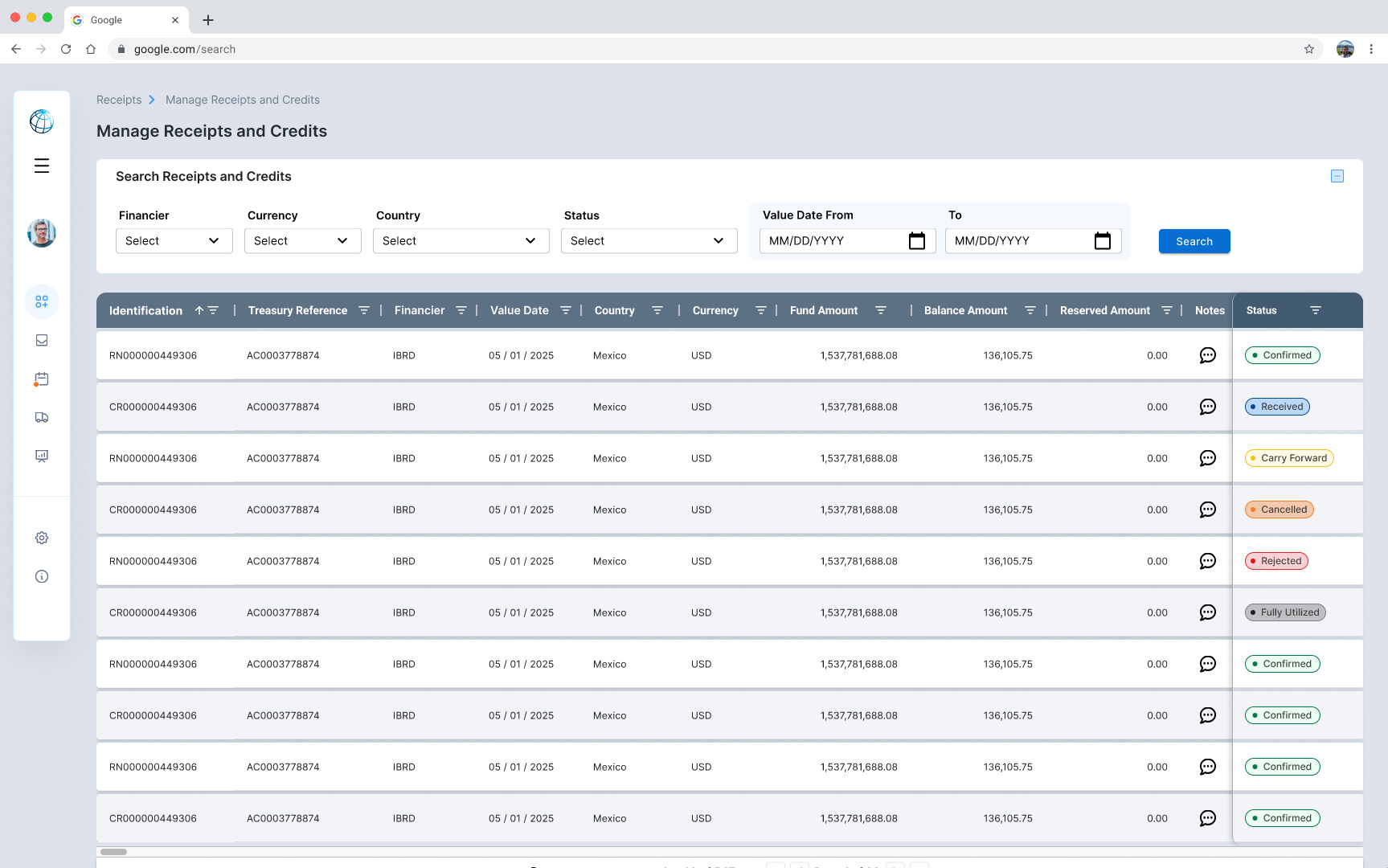
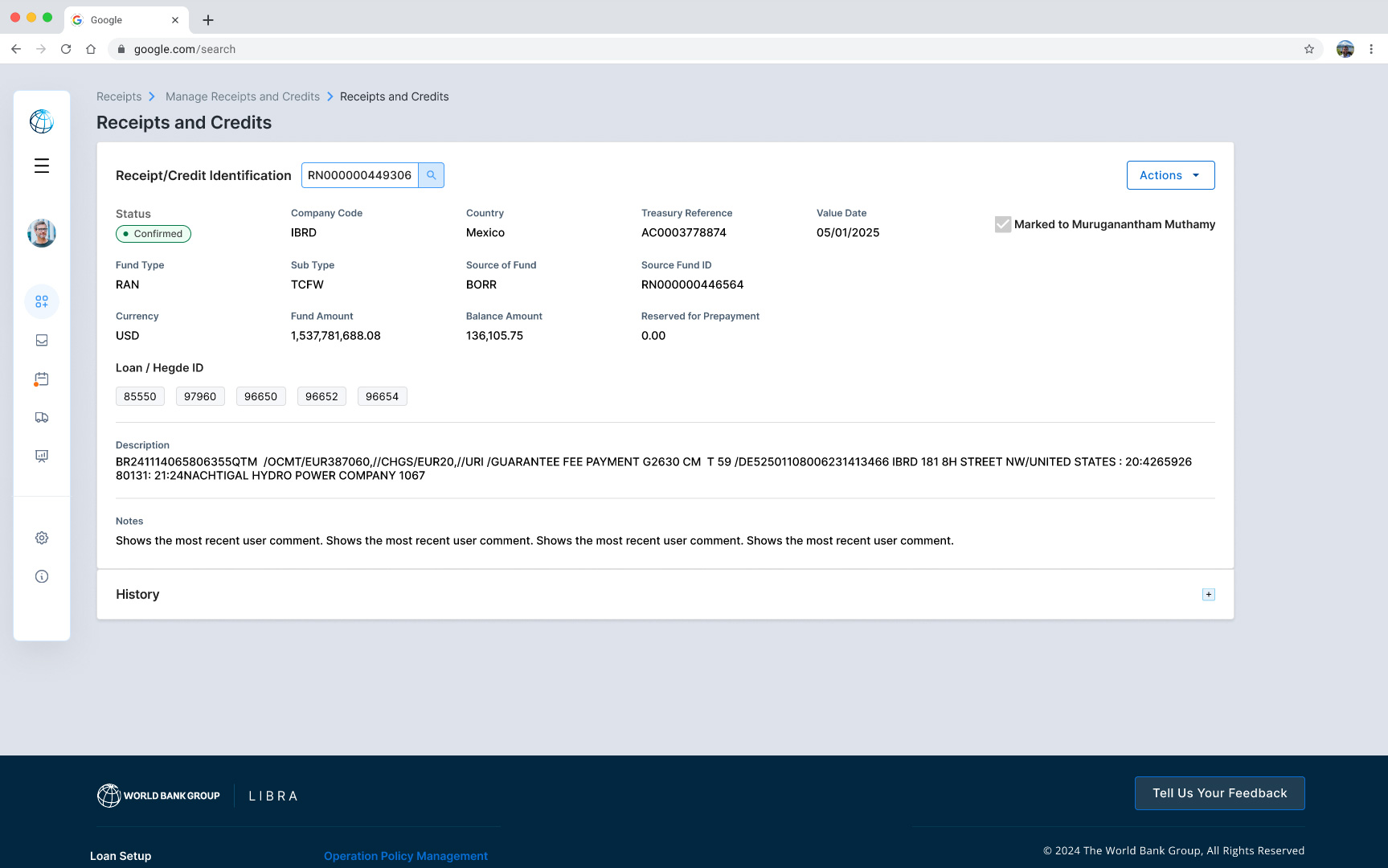
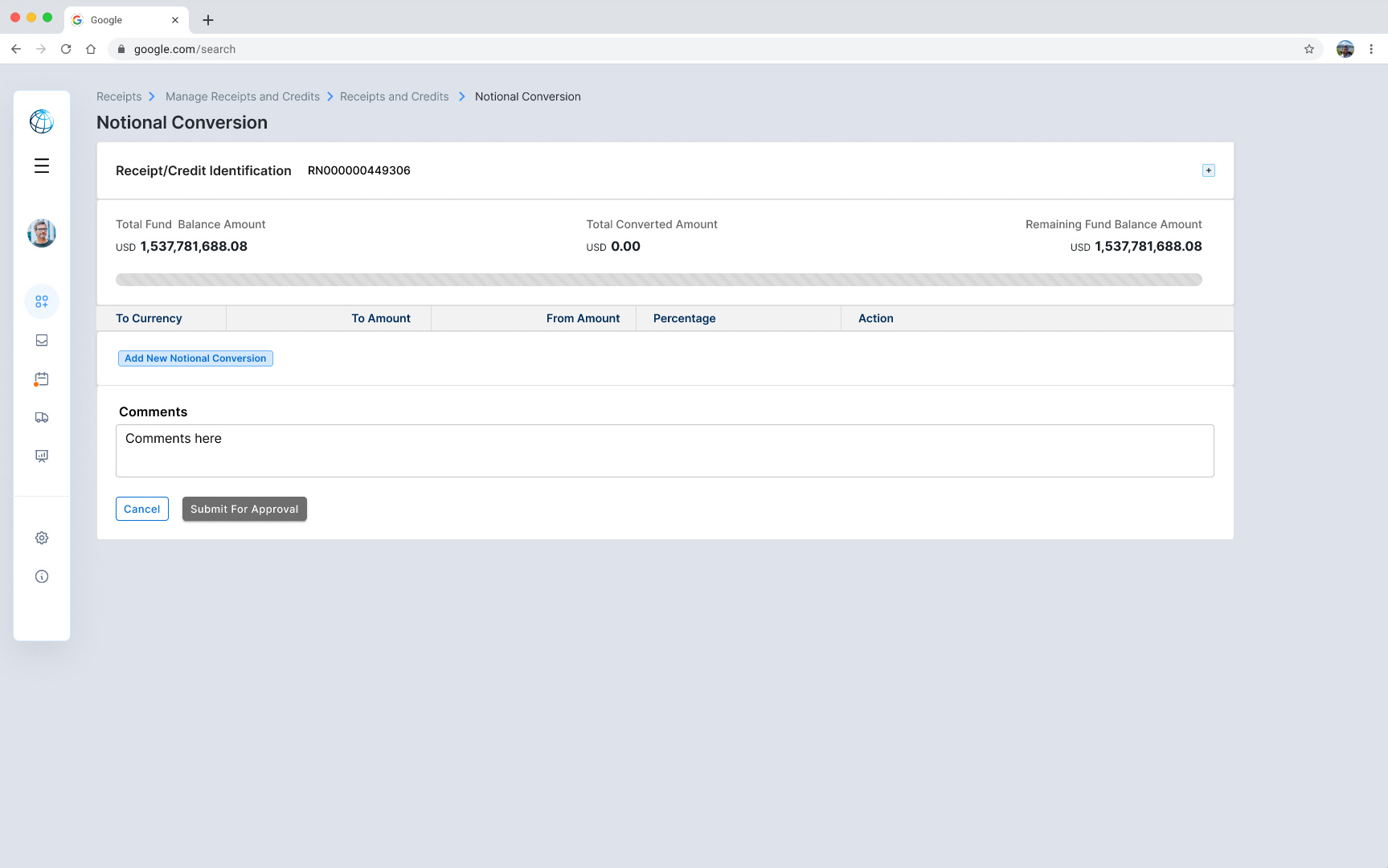
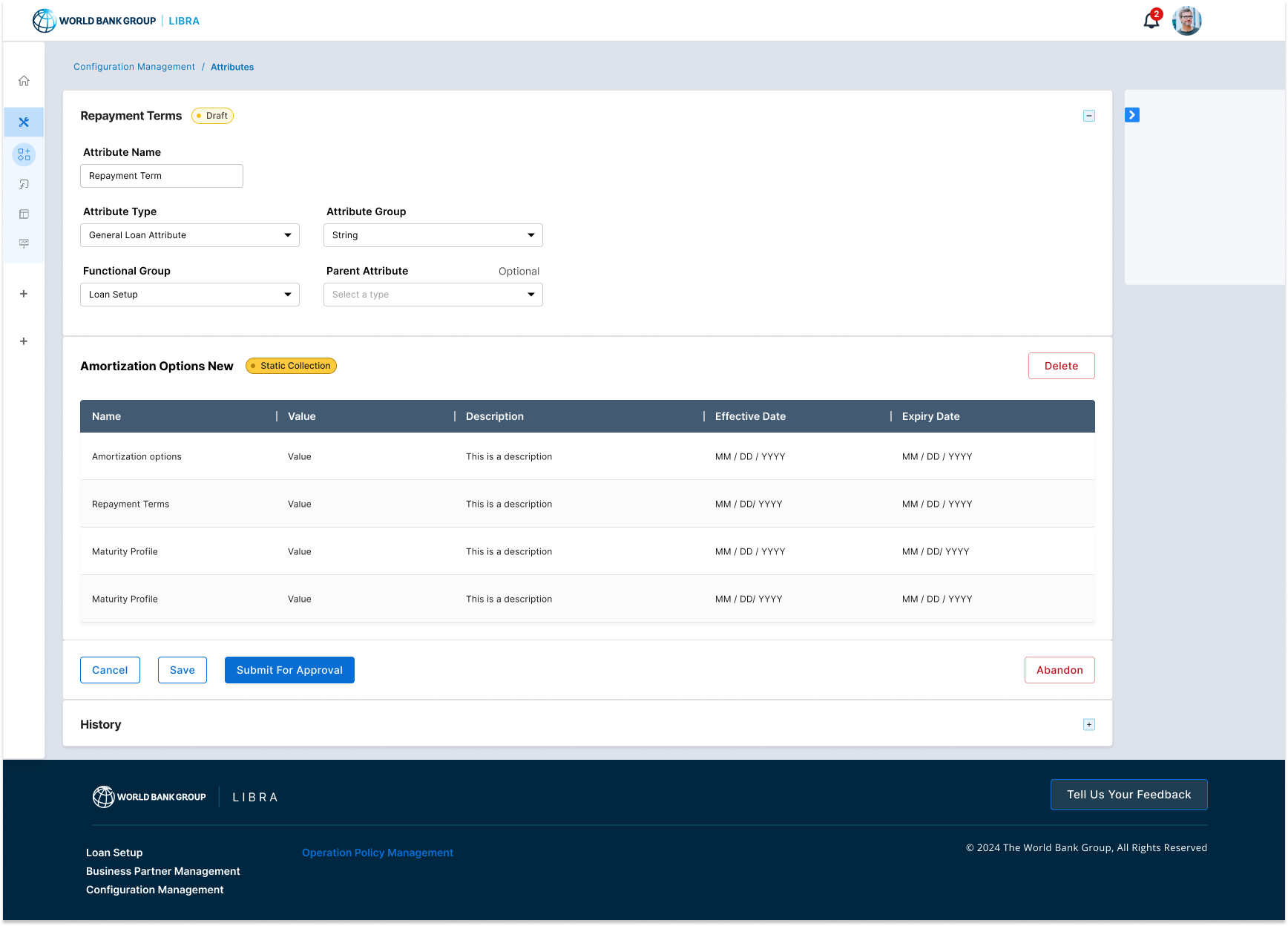
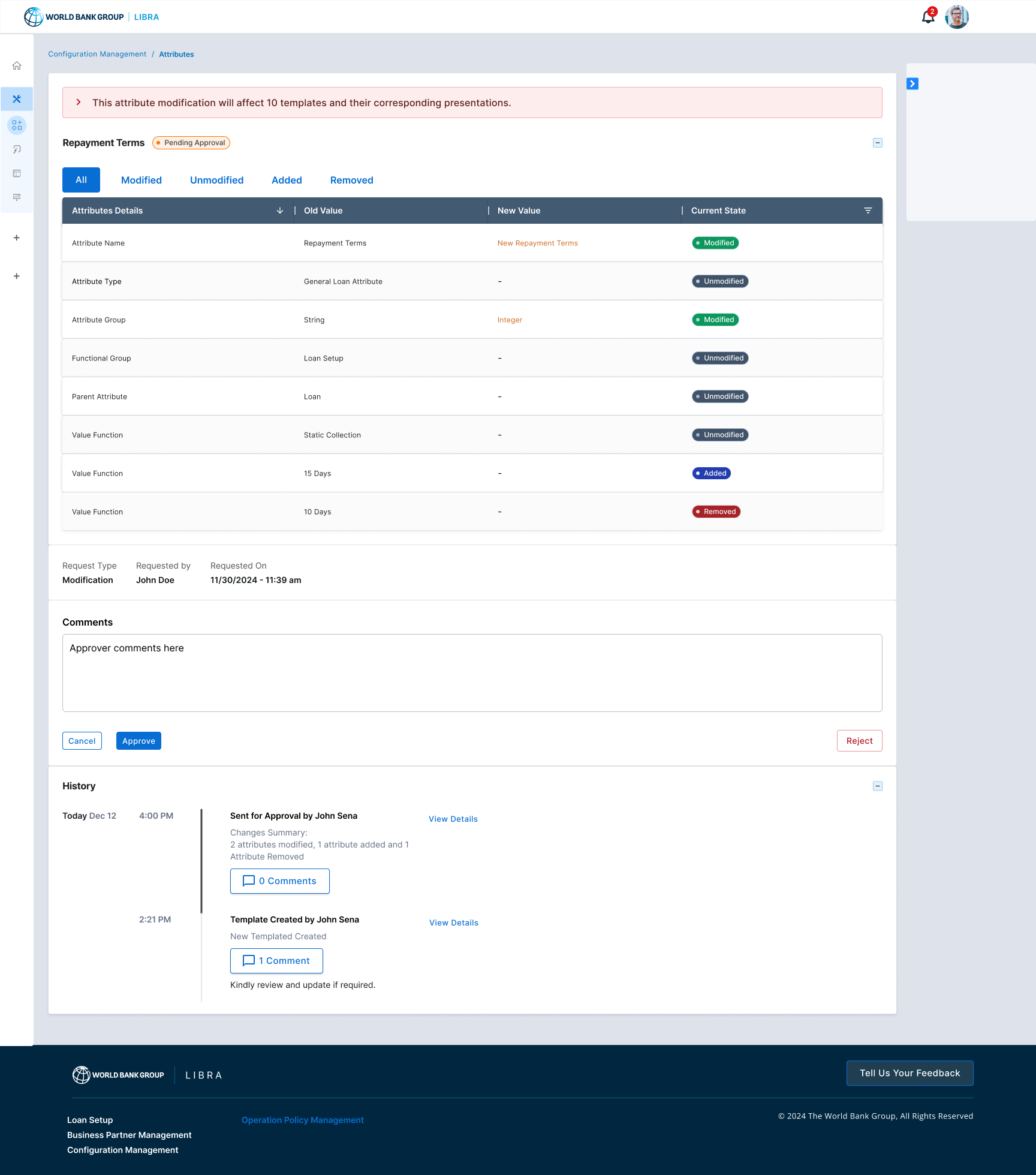
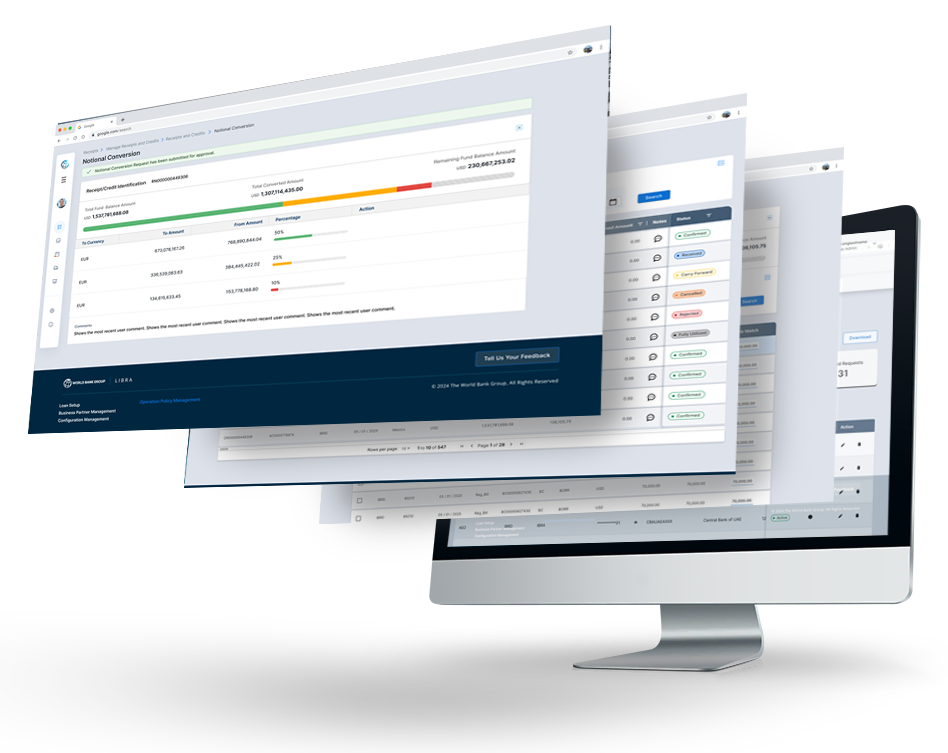
Based on our research and insights, the team designed scalable microservice-based page structures and introduced a modular layout system that promotes reusability and design consistency. We also established a comprehensive UI design system, including interaction patterns, accessibility guidelines, and visual standards that ensure a cohesive user experience across all touchpoints.
Prototypes and interactive design concepts were tested with both core business stakeholders and actual end users to validate usability and relevance. Iterative usability testing ensured the final interfaces aligned with users’ day-to-day work and mental models.
The UX approach was centered around improving user productivity, ensuring system scalability, enforcing visual and behavioral consistency, and embracing design minimalism to reduce cognitive load.